
Privilege went from off-limits to everyday” to “AI privilege review went from off-limits to everyday.
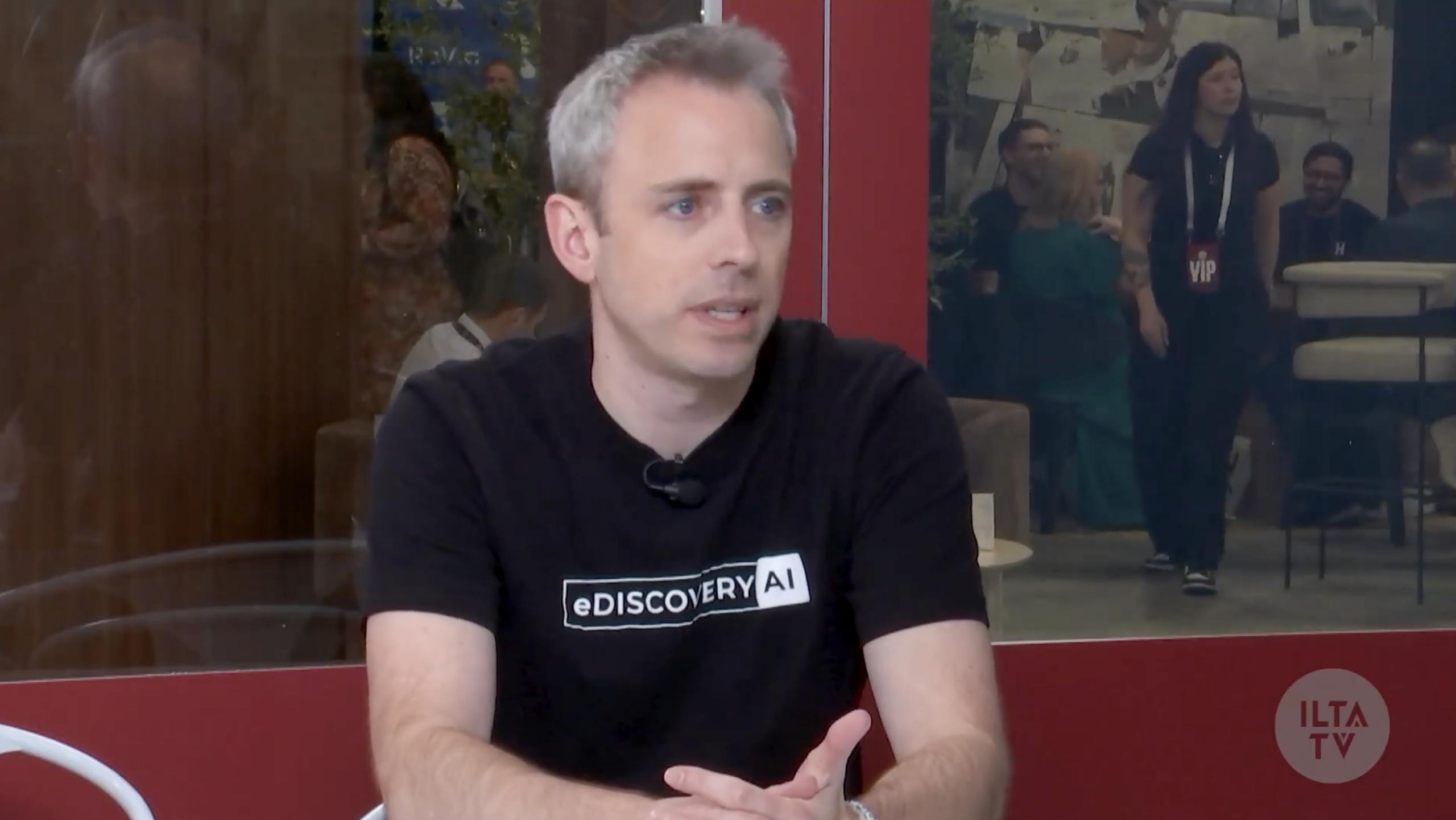
When Jim Sullivan sat down with Michael Foster of ILTA TV on the exhibit hall floor at ILTACON this August, the plan was a quick ten minutes on who we are and what we’re building. It turned into a pretty good snapshot of how fast this market is moving, especially around AI privilege review, told by someone who has watched it from the review room up. The full interview is below if you’d rather hear it directly from Jim.
Jim’s background is the reason eDiscovery AI looks the way it does. He went straight from law school into document review and has stayed in eDiscovery through every wave of technology since, including years as an early and very vocal TAR advocate. He founded eDiscovery AI three and a half years ago around a simple observation: the problems legal teams fight every day haven’t changed much in a decade, but the tools available to solve them have. “We’re trying to solve the same problems we’ve always had, but using technology to solve them better,” he told Foster. Anyone who has run a matter knows those problems. Human document review still takes a big share of the discovery budget. Privilege review and privilege logs eat weeks. And case teams usually learn the facts that matter later than they’d like. Most of our team spent the last decade consulting on TAR projects, and Jim credits that history with keeping us focused on what people actually struggle with.
A RAG skeptic changes his mind
Anyone who has heard Jim speak knows he hasn’t been kind to RAG tools. “You’ll hear me complain more than anyone about how RAG tools aren’t good,” he said, including the first version of our own CaseBot. Retrieval has always been the weak spot. If the system pulls back the wrong documents, the language model can’t give you a good answer, no matter how capable it is. A single search also rarely gets the full picture, because when you ask a question about a case, you often don’t yet know everything the question touches.
The latest CaseBot goes after that problem with an agentic process. It searches your dataset, learns about the issue, and uses what it learns to go back and find more, much like a good associate would. Jim was candid that this changed his own view. Retrieval has improved to the point where “we’re getting fantastic results,” and the tool can do things that weren’t possible a year ago. The new release also adds Skill Agents that turn that research into finished, cited work product such as chronologies and deposition kits. Our CaseBot announcement has the details.
Privilege went from off-limits to everyday
The part of the interview that stood out most afterward was Jim’s account of how quickly attitudes toward AI have shifted. He still remembers one of his first TAR demos, when an attorney told him, “This is super cool, but you can’t expect me to actually use that.” The same attorney asked him to call back when it was something he could actually use. Realistically, that took about five years.
AI has moved on a much faster clock. Early on, Jim couldn’t suggest that AI would take over first-pass review at a law firm without starting an argument. After that, privilege was the line nobody wanted to cross, and saying you’d use AI for it got you called crazy. We didn’t run a single privilege job before last October. In the month before ILTACON, our platform processed more AI privilege review documents than any other job type. The path has been consistent: teams got comfortable using AI for early case assessment, which opened the door to relevance review, then privilege, and now redactions. Our volumes doubled in the two months leading up to the show.
In Jim’s view, AI privilege review clicked because people trusted the workflow. Our Privilege review drafts the privilege log, with a document summary and the reasoning behind each call, and the review team confirms it. Attorneys still make the call, and most of the hours spent writing log entries go away. “That evolution is absolutely happening,” he said, “and we’re seeing it in real time a lot faster than we saw with TAR or other technologies that I’ve been around.”
Where it goes from here
Asked to look one, three, and five years out, Jim said that if the technology froze today, there would still be enough to build on for the next decade. The hard part is picking which ideas people need, which is why our team spends so much time listening at conferences, events, and meetings. He admitted it can be frustrating as a builder, since almost everything we’ve shipped has been ready for a major upgrade within about three months, and several of our tools are already on their second or third version.
For the industry, he expects the work to keep shifting earlier in a matter. Teams will get to their data sooner and learn what’s in it before committing to a review strategy, and eventually they’ll find answers in data at rest, wherever it lives. That thinking is behind our Early Case Intelligence™ solution, Case Insight™, which surfaces facts, issues, and key players before anyone opens a document.
Foster closed by asking where people can learn more. Jim pointed them to ediscoveryai.com and to the conference floor, since we’re at most of the shows now. “You could probably tell that we love technology, we love the space, we love solving problems,” he said. “So just hearing what types of things people are interested in always excites me.” That goes for the whole team. If you have a problem from your discovery work you’d like to talk through, tell us about it, or check our events page to find us at the next show. And if you’d rather keep reading first, our Thought Leadership blog has more from Jim and the team.


